
Eurosatory 2026 offered a clear view into where the defense and aerospace industries are heading. Beyond the impressive systems, technologies, and demonstrations, one message stood out across conversations with manufacturers, engineers, and technology leaders: the industry is moving faster than ever, and the companies that will lead the next decade are building capabilities that go far beyond the final product itself.
The Defense Industry Is Ahead of Itself
One of the most striking observations from Eurosatory was how aggressively companies are preparing for future requirements rather than current demand. Manufacturers are not simply solving today’s challenges, they are anticipating tomorrow’s battlefield, tomorrow’s aerospace platforms, and tomorrow’s supply chain realities.
Programs that are still years away from large-scale deployment are already driving investments in manufacturing technologies, materials science, and production infrastructure. Companies understand that waiting until demand arrives is no longer an option. The organizations that establish manufacturing advantages today will be the ones capable of scaling tomorrow.
Vertical Integration Is Becoming the New Standard
As geopolitical uncertainty grows and supply chains become increasingly vulnerable, defense companies are bringing more of their production processes in-house.
The reasons are clear. Maintaining complete control over production allows organizations to protect intellectual property, ensure confidentiality, reduce dependence on external suppliers, and maintain tighter quality control throughout the manufacturing process.
At Eurosatory, it became evident that many defense and aerospace companies are no longer interested in outsourcing critical manufacturing stages. Instead, they are investing in capabilities that allow them to oversee every detail—from raw material development to final production.
In industries where performance, reliability, and security are non-negotiable, ownership of the manufacturing process has become a strategic advantage.
Materials Have Become the Real Competitive Edge
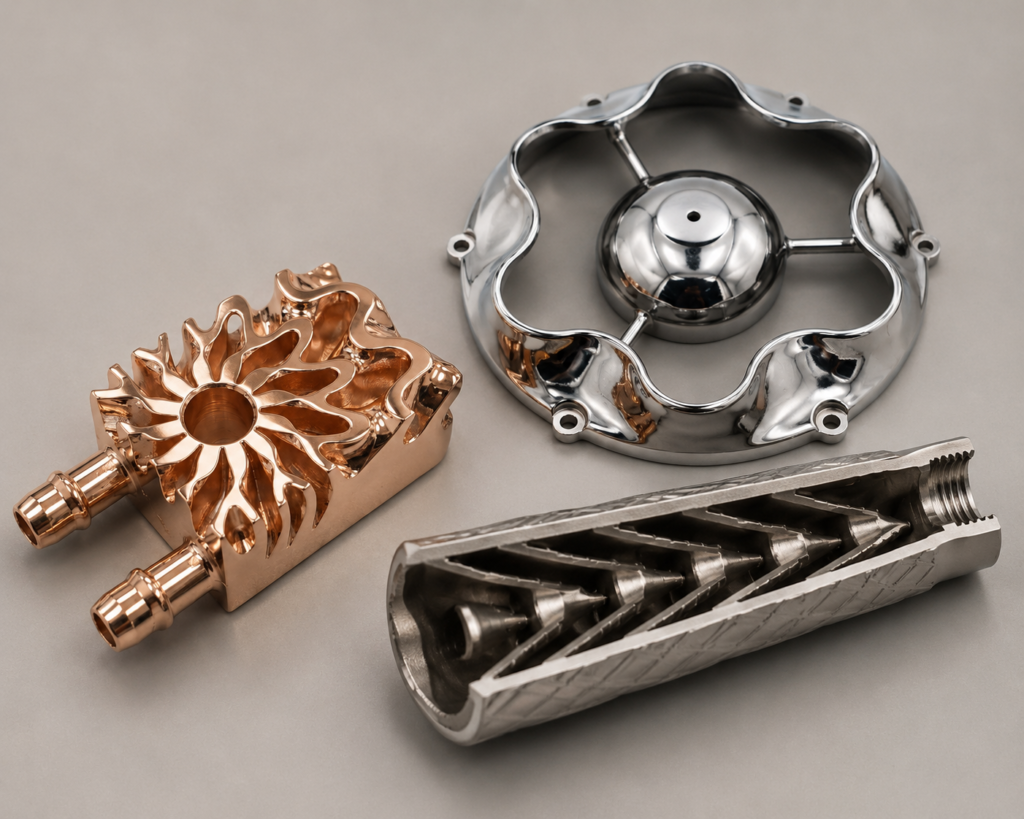
While advanced hardware often captures attention, the real innovation race is increasingly centered around materials.
Across defense and aerospace applications, companies are developing highly specialized materials designed to withstand extreme temperatures, mechanical loads, environmental conditions, and operational requirements. In many cases, the performance of the final component depends more on the material itself than on the manufacturing process.
As a result, material development has become one of the most important areas of investment. Companies are dedicating significant resources to discovering, testing, and qualifying materials that provide even the smallest performance advantage over competitors.
The ability to create application-specific materials is becoming a key differentiator in the market.
Scaling Advanced Applications Is the Next Challenge
Another recurring theme throughout Eurosatory was scale.
Many of the technologies being developed today are not intended for low-volume production. Defense programs increasingly require components and systems that must be manufactured in the tens of thousands, hundreds of thousands, or even millions of units annually.
Meeting these production targets while maintaining the strict tolerances and performance requirements demanded by defense and aerospace applications is an enormous challenge.
The materials involved are often unique, highly engineered, and designed to perform under extreme conditions. Producing such components consistently and at scale requires a manufacturing ecosystem capable of balancing precision, repeatability, and throughput.
Owning the Entire Manufacturing Chain
What became increasingly clear throughout the exhibition is that leading companies are seeking ownership of every stage of production.
The traditional model of relying on multiple suppliers for different manufacturing steps is being replaced by vertically integrated approaches that bring material development, process optimization, production, quality control, and final assembly under one roof.
Organizations want full visibility into how their products are made, how their materials behave, and how quickly they can adapt when requirements change.
This level of control is becoming essential not only for performance and security, but also for speed. The ability to rapidly develop, test, and deploy new solutions may become one of the most important competitive advantages in the coming years.
Material Development Comes with Manufacturing Challenges
As material innovation accelerates, so do the challenges associated with producing and handling advanced materials.
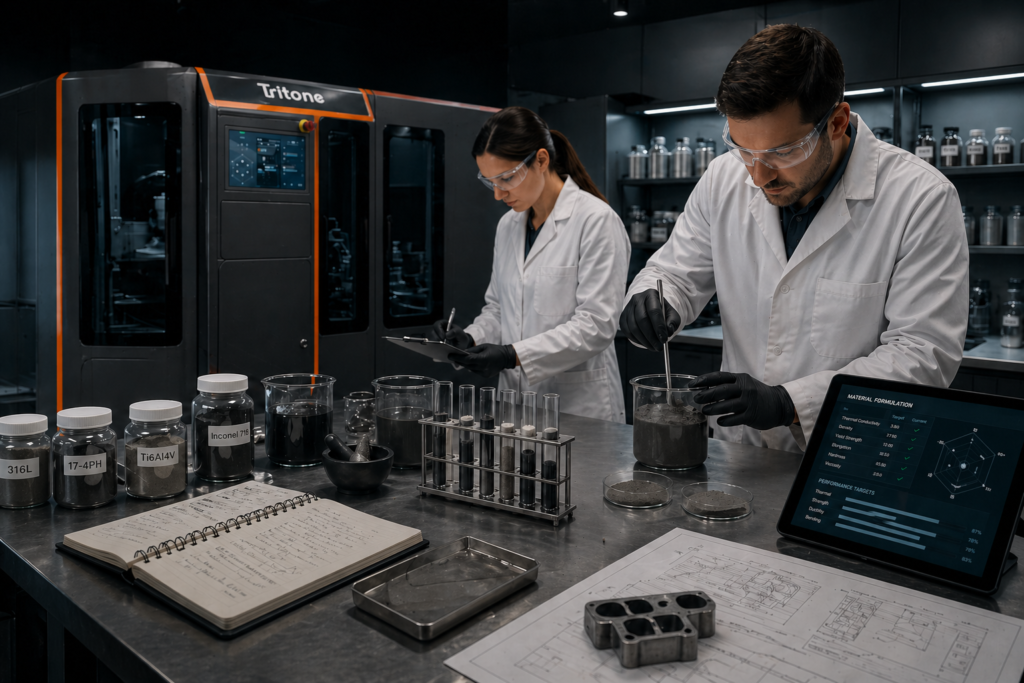
Many high-performance materials used in defense and aerospace rely on sintering technologies and metal powder-based manufacturing processes. While these materials offer exceptional properties, they also introduce significant challenges related to safety, handling, storage, contamination, and operator exposure.
Working with metal powders remains one of the most demanding aspects of advanced manufacturing. The challenge becomes even greater during material development, where repeated testing and formulation changes can increase exposure and complexity.
As manufacturers continue pushing the boundaries of material science, finding safer and more efficient ways to develop and process these materials will become increasingly important.
Looking Ahead
Eurosatory 2026 demonstrated that the future of defense manufacturing will be defined by three critical capabilities: material innovation, production control, and scalable manufacturing. The companies that successfully combine these elements will be best positioned to respond to rapidly evolving market demands and technological requirements.
At Tritone, we see this trend every day. MoldJet technology enables manufacturers to work with metal feedstocks in paste form, eliminating the need to handle loose metal powders during printing. More importantly, our team works closely with customers to develop materials specifically tailored to their application requirements. From formulation and testing to printing and validation, we help companies accelerate material development while ensuring the final material meets the performance, quality, and production standards their applications demand.